
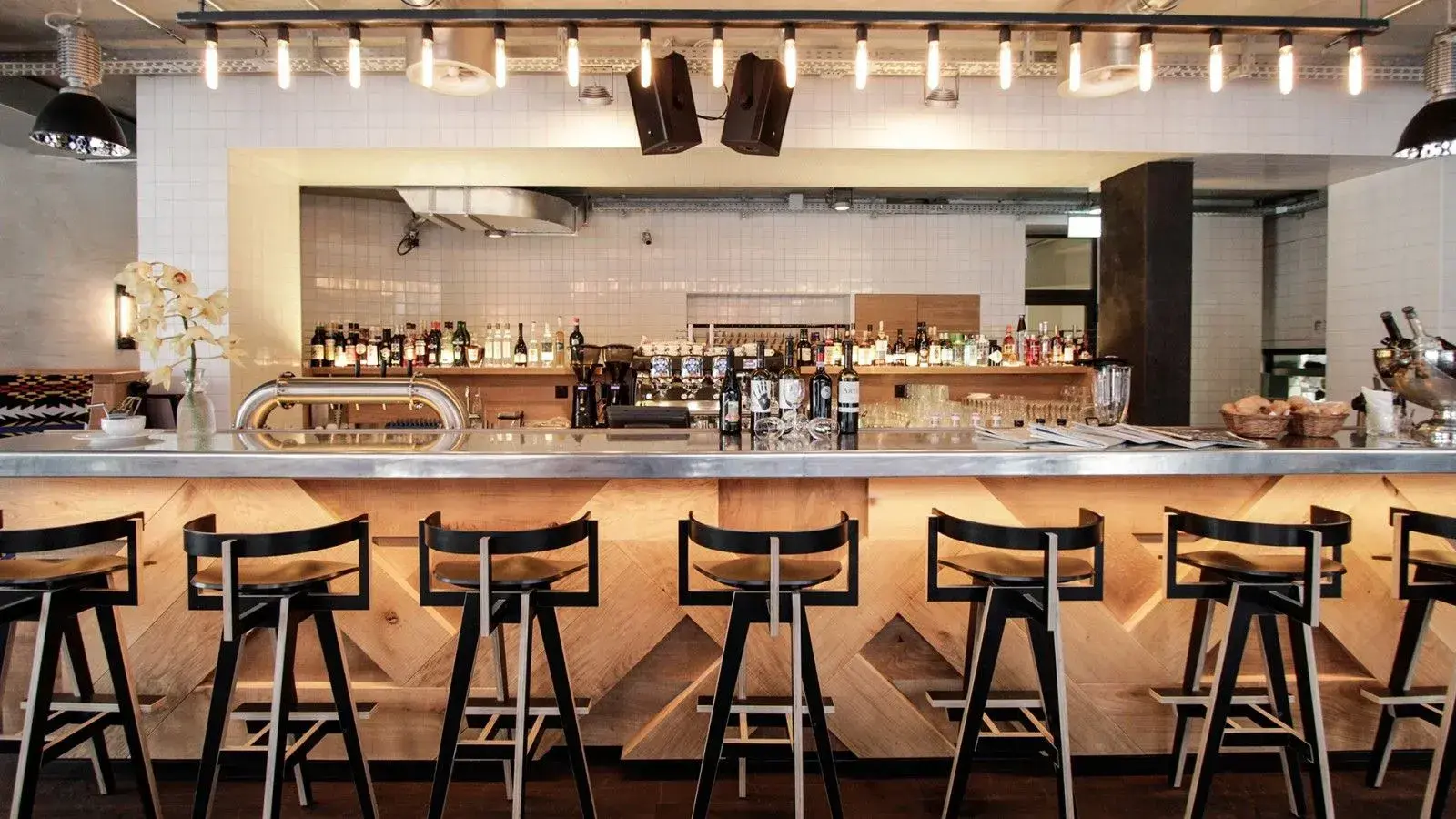
Counter height bar stools are designed to provide comfortable seating at kitchen islands, counters, breakfast bars, and other elevated surfaces.
Most counter-height stools have a seat height of approximately 24 to 26 inches (61 to 66 cm), making them suitable for counters that are generally 35 to 39 inches high (89 to 99 cm). The key to choosing the right stool is matching the seat height with the surface height while leaving enough legroom underneath.
People often search for counter height bar stools because the wrong stool size can make an otherwise attractive kitchen island uncomfortable to use. Whether you are furnishing a new home, replacing old seating, or creating a casual dining area, understanding counter stool dimensions, spacing, materials, and styles can help you make a much better purchase.
What Are Counter Height Bar Stools?
Counter height bar stools are seating designed specifically for surfaces that are higher than a standard dining table but lower than a traditional bar. They are commonly used around kitchen islands, peninsula counters, and built-in breakfast bars.
Although the terms counter stool and bar stool are sometimes used interchangeably, they do not necessarily refer to the same height. Traditional bar stools are often considerably taller, while counter height stools are intended for standard kitchen counter surfaces.
The typical measurements are:
| Stool Type | Typical Seat Height | Recommended Surface Height |
| Dining chair | 17–19 inches | 28–30 inches |
| Counter height stool | 24–26 inches | 35–39 inches |
| Bar height stool | 28–30 inches | 41–43 inches |
| Extra-tall stool | 33–36 inches | 45–48 inches |
These measurements are general guidelines rather than strict rules. Individual manufacturers may use slightly different dimensions.
How Tall Are Counter Height Bar Stools?
The most common counter height bar stools measure between 24 and 26 inches from the floor to the top of the seat. In centimeters, that is approximately 61 to 66 cm.
A 24-inch stool is often a good choice for a lower counter, while a 26-inch stool can work well with a taller kitchen island.
Before purchasing, measure your counter from the floor to the top of the countertop. Then consider the distance between the top of the seat and the underside of the counter.
Ideal Counter Stool Height
For comfortable seating, aim for approximately 9 to 12 inches of space between the stool seat and the underside of the counter.
For example:
- 35-inch counter → approximately 24–25-inch seat
- 36-inch counter → approximately 24–26-inch seat
- 37-inch counter → approximately 25–27-inch seat
- 38-inch counter → approximately 26–28-inch seat
- 39-inch counter → approximately 27–28-inch seat
These numbers are useful starting points, but personal comfort and the construction of the counter also matter.
Counter Height Bar Stools vs. Bar Height Stools
One of the most common shopping mistakes is confusing counter height and bar height.
Counter height stools are generally intended for kitchen islands and counters. Bar height stools are designed for taller bar tables and pub-style surfaces.
A typical counter stool has a seat around 24–26 inches high. A traditional bar stool may have a seat around 28–30 inches high.
Using a bar-height stool at a normal kitchen island can leave you sitting too high. Your knees may have limited clearance, and the countertop can feel uncomfortably low.
Quick Comparison
| Feature | Counter Height | Bar Height |
| Seat height | 24–26 inches | 28–30 inches |
| Seat height in cm | 61–66 cm | 71–76 cm |
| Common surface | Kitchen island | Home bar |
| Typical atmosphere | Casual kitchen seating | Pub/bar seating |
| Best for | Everyday meals | Drinks and entertaining |
If your seating area is a normal kitchen island, counter height is usually the safer choice.
How to Measure for Counter Height Bar Stools
Measuring your space before shopping can prevent many problems.
Step 1: Measure the Counter
Use a tape measure to determine the distance from the floor to the top of the countertop.
Do not assume that every kitchen counter is exactly the same height. Custom islands and renovated kitchens can have different dimensions.
Step 2: Measure the Underside
If possible, measure from the floor to the underside of the counter. This gives you a better idea of available legroom.
Step 3: Choose the Seat Height
Subtract approximately 9 to 12 inches from the counter height. This provides a starting point for choosing a comfortable stool.
Step 4: Consider the Stool’s Overall Height
If the stool has a tall backrest, arms, or decorative frame, check its total height. This is especially important if the stools will sit underneath the island when not being used.
How Much Space Do You Need Between Counter Stools?
Choosing the right number of stools is just as important as choosing the correct height.
A cramped island can make dining uncomfortable, even when the stools themselves are perfectly sized.
As a general guide, allow around 24 to 30 inches of counter width per person.
For example:
| Counter Length | Approximate Seating |
| 48 inches | 2 stools |
| 60 inches | 2–3 stools |
| 72 inches | 3 stools |
| 84 inches | 3–4 stools |
| 96 inches | 4 stools |
Stools with arms may require additional space.
If you have children or expect people to eat full meals at the island, providing more personal space can make the seating arrangement considerably more comfortable.
Counter Height Bar Stools With Backs
Backed stools are popular because they provide additional support. They are especially useful when people regularly spend extended periods sitting at the kitchen island.
Backrests can range from low-profile designs to full-height chair-style backs.
Advantages of Backed Stools
- Better back support
- More comfortable for longer meals
- Often easier for children to use
- Creates a furniture-like appearance
- Can make an island feel more like a dining area
The main disadvantage is that backed stools can visually occupy more space. In smaller kitchens, backless stools may create a cleaner and less crowded appearance.
Backless Counter Height Bar Stools
Backless stools are compact and easy to tuck completely beneath a counter.
They can be particularly useful in apartments, small kitchens, and narrow spaces.
Why Choose Backless Stools?
- Easy to store under the island
- Minimal visual footprint
- Usually lightweight
- Simple appearance
- Good for occasional seating
However, they generally provide less back support than stools with backs.
If your family eats at the island every day, a supported seat may be worth considering.
Counter Height Bar Stools With Arms
Armrests can add comfort and give stools a more substantial chair-like appearance. They can also make it easier for some people to sit down and stand up.
However, armrests require extra width.
Before purchasing stools with arms, measure the available counter space carefully. Two wide stools with arms may occupy the same space as three narrower backless stools.
Swivel Counter Height Bar Stools
Swivel stools have seats that rotate, often allowing users to turn toward other people without moving the entire stool.
They are popular in entertainment-focused kitchens because they make conversation easier.
Benefits of Swivel Seating
- Easier movement
- Convenient for socializing
- Can reduce the need to move the entire stool
- Useful in open-plan kitchens
A swivel mechanism can also make getting into and out of the seat easier.
However, a swivel mechanism adds moving parts, so build quality is important.
Upholstered Counter Height Bar Stools
Upholstered stools can provide greater comfort than hard wooden or metal seats.
Common upholstery materials include:
- Fabric
- Faux leather
- Genuine leather
- Velvet
- Performance textiles
- Woven materials
Fabric can create a warm and inviting appearance, while leather or faux leather may be easier to wipe clean.
For busy households, stain-resistant upholstery can be especially practical.
Wooden Counter Height Bar Stools
Wooden stools are popular because they work with many interior design styles.
Depending on the finish, wood stools can complement:
- Farmhouse kitchens
- Traditional interiors
- Scandinavian spaces
- Modern kitchens
- Rustic homes
- Coastal designs
Natural wood can also add warmth to kitchens containing large amounts of stone, tile, or metal.
Metal Counter Height Bar Stools
Metal stools often have a modern or industrial appearance.
They can work especially well in contemporary kitchens, loft-style interiors, restaurants, and entertainment areas.
Powder-coated metal is commonly used because it can provide a durable finish. However, hard metal seats may be less comfortable for long periods unless they include cushions or ergonomic shaping.
Choosing the Right Style
The best counter height bar stools should complement the room rather than compete with it.
Consider the existing design of your kitchen.
Modern
Look for:
- Clean lines
- Simple silhouettes
- Neutral colors
- Metal frames
- Minimal decoration
Farmhouse
Consider:
- Natural wood
- Woven seats
- Distressed finishes
- Soft neutral upholstery
Industrial
Consider:
- Black or dark metal
- Exposed hardware
- Wood-and-metal combinations
- Simple geometric forms
Mid-Century Modern
Look for:
- Tapered legs
- Curved backs
- Warm wood
- Simple upholstery
Contemporary
Choose streamlined designs with a balance of comfort and visual simplicity.
Counter Height Bar Stools and Average Seating Comfort
Height is only one part of comfort.
A stool can have the correct height and still feel uncomfortable if the seat is too narrow, too shallow, or poorly supported.
Pay attention to:
- Seat width
- Seat depth
- Backrest angle
- Footrest position
- Cushion thickness
- Armrest height
- Overall stability
A built-in footrest is particularly useful because it allows your feet to rest naturally rather than dangling.
Why Footrests Matter
A footrest may seem like a small design feature, but it can significantly improve comfort.
When seated on an elevated stool, your feet need somewhere stable to rest. Without support, your legs may hang or your posture may become uncomfortable.
A well-positioned footrest allows you to shift some weight away from the seat and maintain a more relaxed posture.
Counter Height Bar Stools for Small Kitchens
Small kitchens require careful planning.
Instead of selecting bulky stools with large backs and arms, consider streamlined designs that can slide underneath the counter.
Backless stools are often excellent for tight spaces because they can disappear beneath the island when not in use.
Another option is a stool with a narrow frame and a compact backrest.
Avoid filling every available inch of counter space with seating. Leaving adequate clearance makes the room easier to move through.
Counter Height Bar Stools for Large Kitchens
Large kitchens offer greater flexibility.
You may be able to use:
- Wide upholstered stools
- Swivel stools
- Armchairs
- Large wooden stools
- Designer statement pieces
A large island can also accommodate multiple seating styles, although consistency usually creates a more cohesive appearance.
Common Mistakes When Buying Counter Stools
Even attractive stools can be the wrong choice if measurements are ignored.
1. Buying by Appearance Alone
A stool may look perfect online but be uncomfortable in person.
Always check measurements.
2. Confusing Counter and Bar Height
This is perhaps the most important mistake to avoid.
Check the manufacturer’s stated seat height, not just the product name.
3. Ignoring Legroom
A thick countertop or unusual island construction can reduce knee clearance.
4. Choosing Too Many Stools
Crowding reduces comfort and makes the island harder to use.
5. Forgetting the Counter Overhang
A countertop overhang affects where your knees and legs sit.
6. Ignoring Cleaning Requirements
White fabric may look beautiful but may not be practical in a busy household.
7. Forgetting the Stool’s Total Height
If you want the stools to slide underneath the island, check their full height and backrest dimensions.
How to Choose the Best Counter Height Bar Stools
A simple buying checklist can make the process easier.
Look for stools that offer:
- Correct seat height
- Enough legroom
- Appropriate seat width
- Comfortable support
- Stable construction
- A suitable footrest
- Easy-to-clean materials
- A style that complements the room
- Enough spacing between neighboring stools
Think about how the stools will actually be used rather than choosing based solely on appearance.
Counter Height Bar Stools Height Comparison
The following table provides a quick reference:
| Stool Category | Seat Height | Best Surface |
| Low counter stool | 22–23 inches | Lower counters |
| Standard counter stool | 24–26 inches | Kitchen islands |
| Tall counter stool | 26–27 inches | Higher counters |
| Bar stool | 28–30 inches | Bar-height surfaces |
| Extra-tall stool | 33–36 inches | Commercial/high counters |
Manufacturers may vary, so always verify the exact dimensions of the individual model.
Materials and Durability
The material you choose affects both appearance and longevity.
Solid Wood
Solid wood can be durable and repairable, depending on construction and finish.
Metal
Metal frames can offer excellent strength and are common in modern and industrial designs.
Plastic and Molded Materials
These can be lightweight and easy to clean, making them practical for casual spaces.
Upholstery
Upholstery increases comfort but requires more attention to cleaning and maintenance.
The best material depends on how frequently the stools will be used and who will use them.
Are Counter Height Bar Stools Good for Everyday Dining?
Yes. Counter stools can work very well for everyday dining when the dimensions are appropriate.
For daily use, prioritize comfort over purely decorative features.
A stool with a supportive back, comfortable cushion, footrest, and stable frame may be a better choice than a stylish but rigid model.
If your household regularly eats breakfast, works, studies, or socializes at the island, ergonomic comfort becomes especially important.
Counter Height Bar Stools vs. Dining Chairs
Dining chairs are normally designed for tables around 28–30 inches high. Counter stools are taller because kitchen counters are elevated.
Using a dining chair at a kitchen island usually leaves the person sitting too low.
Likewise, using a tall bar stool at a standard dining table creates the opposite problem.
Matching the seating height to the surface is essential for comfortable posture.
How Height, Genetics, and Lifestyle Affect Human Height
Although this topic is about counter height bar stools, it is worth distinguishing furniture height from human height. A person’s physical height is influenced by several factors, particularly genetics.
Genetics plays a major role in determining potential adult height. Nutrition also matters during childhood and adolescence because adequate calories, protein, vitamins, and minerals support normal growth.
Other factors can include:
- Overall health
- Hormonal development
- Sleep
- Physical activity
- Childhood nutrition
- Environmental conditions
However, these biological factors have no bearing on which stool height should be selected for a kitchen island. Furniture should be chosen according to the counter height and the user’s comfort, not simply a person’s standing height.
Interesting Facts About Counter Height Seating
Here are several useful facts shoppers often overlook:
- Counter stools are generally shorter than traditional bar stools.
- A few inches can make a noticeable difference in seating comfort.
- Seat height is more important than overall stool height when matching furniture.
- Armrests require additional horizontal space.
- Backless stools are usually easier to tuck underneath an island.
- Swivel stools can make socializing easier.
- A footrest can significantly improve comfort.
- Countertop thickness and overhang affect legroom.
- Two wide stools may require the same space as three narrow stools.
- The best stool is not necessarily the tallest or most expensive option.
Frequently Asked Questions
How tall should counter height bar stools be?
Most counter height bar stools have a seat height of approximately 24 to 26 inches (61 to 66 cm). They are commonly paired with counters around 35 to 39 inches high.
What is the standard counter stool height?
The standard range is generally 24–26 inches from the floor to the seat. Always check the manufacturer’s exact measurement before buying.
What is the difference between counter height and bar height?
Counter-height stools are generally around 24–26 inches high at the seat, while traditional bar-height stools are commonly around 28–30 inches. Counter stools are designed for kitchen islands, whereas bar stools are intended for taller bar surfaces.
How much space should be between counter stools?
A useful starting point is around 24–30 inches of counter width per person. Wider stools with arms may require additional space.
Can counter height stools be used at a kitchen island?
Yes. In fact, kitchen islands are one of the most common places to use counter height stools. Measure the island before purchasing to ensure proper legroom.
Are counter height stools comfortable for long periods?
They can be, especially when they include a supportive backrest, comfortable seat, footrest, and appropriate seat depth. Ergonomic design is more important than appearance alone for extended use.
Should counter stools have backs?
It depends on your needs. Backless stools save space and can tuck under the counter, while stools with backs generally provide more support and comfort.
Are swivel counter stools worth it?
Swivel stools can be worthwhile if people frequently socialize around the island. They make it easier to turn and interact without moving the entire stool.
How do I know if a stool is too high?
If your knees are pushed against the underside of the counter or you cannot comfortably position your legs, the stool may be too high. Ideally, you should have roughly 9–12 inches of vertical clearance between the seat and the underside of the counter.
What is the best material for counter stools?
There is no single best material. Wood offers warmth, metal provides a modern appearance and durability, while upholstered seating can offer greater comfort. Your lifestyle and cleaning requirements should guide the decision.
Final Thoughts on Counter Height Bar Stools
Choosing the right counter height bar stools is primarily about getting the measurements right. Most counter stools have a seat height of approximately 24–26 inches (61–66 cm) and are designed for kitchen counters around 35–39 inches (89–99 cm) high.
Beyond height, shoppers should consider legroom, spacing, seat width, back support, footrests, materials, durability, and overall design. Measuring your counter before purchasing is the simplest way to avoid an uncomfortable fit.
Whether you prefer modern metal, classic wood, upholstered seating, or compact backless designs, the ideal counter stool should combine proper proportions with everyday comfort and a style that works naturally with your kitchen.

Alina Frost creates minimal, clean, and aesthetic captions with a calm tone. Her writing is simple yet meaningful, perfect for soft and elegant posts. She focuses on clarity and subtle beauty.