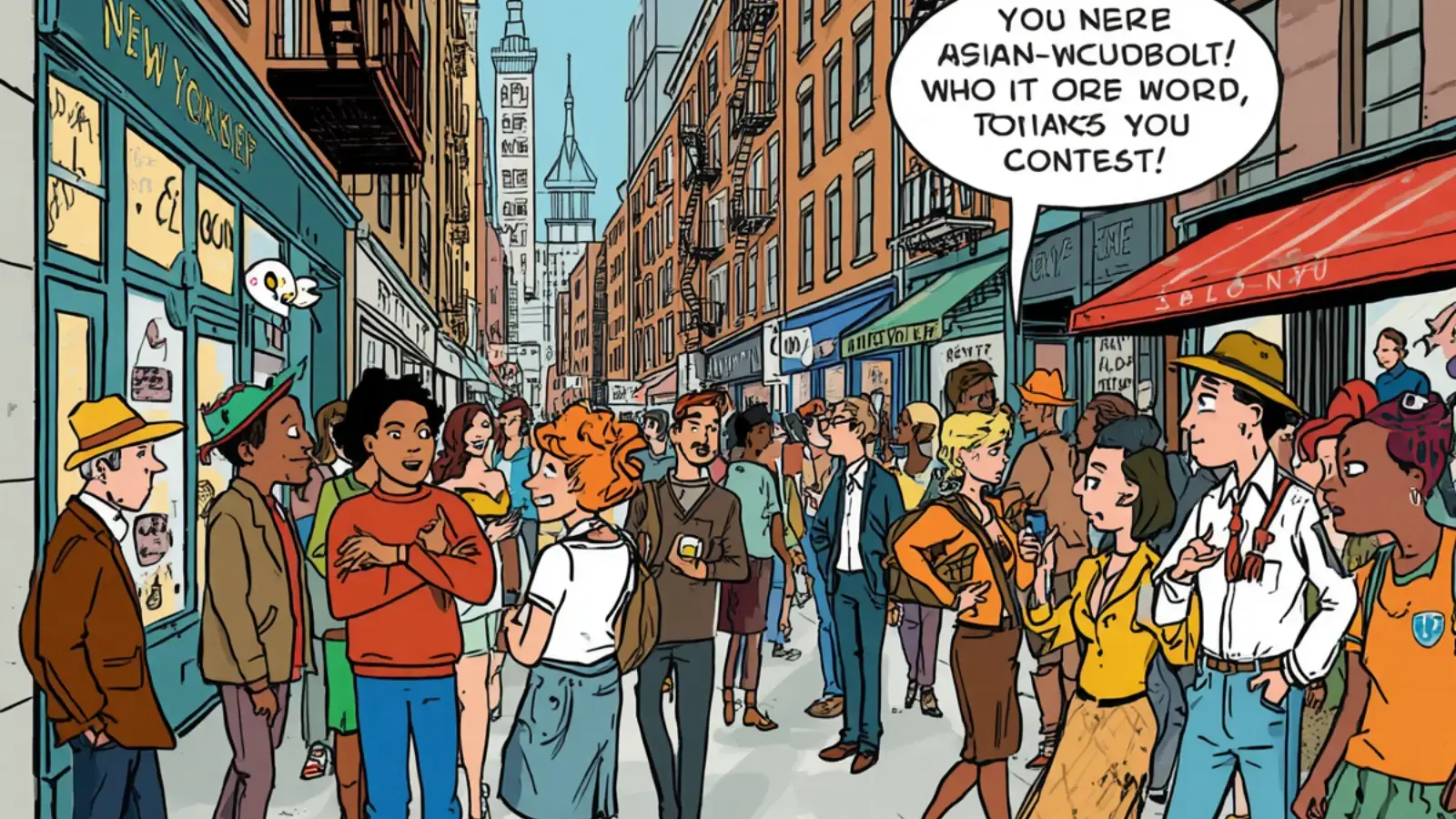
The new yorker caption contest is a weekly challenge in which readers invent short, clever captions for a published cartoon without words, submit them online under strict length limits, help rate peers’ ideas, and vote among finalists so the magazine can crown a winner whose line appears in print.
This long-running tradition tests pure verbal wit against visual setup and has become a training ground for anyone who wants sharper social content.
The same instincts that land a finalist caption also lift Instagram captions, reels, hashtags, engagement rate, and overall visibility when you treat every post like a miniature contest entry.
1. Spotting the Silent Story Inside Every Blank Cartoon Frame
- Study the characters’ body language first; a raised eyebrow or slumped shoulder often hides the joke’s real target.
- Notice props that feel out of place—those odd objects usually carry the punchline seed.
- Ask what conversation was interrupted just before the panel froze; that missing dialogue is pure gold.
- Watch for scale tricks: tiny figures next to giant objects scream ironic contrast.
- Identify the setting’s quiet rules—office, beach, or space station—and break one of them with words.
- Look at eye lines; where the characters gaze often points to the unspoken tension.
- Count the number of figures; two people invite dialogue, one invites internal monologue.
- Spot anachronisms or modern gadgets in classic scenes—they beg for contemporary twists.
- Sense the emotional temperature: panic, boredom, or smugness guides the tone of your line.
- Imagine the frame as a paused Instagram Reel still; the caption must restart the motion in the viewer’s head.
- Train your eye by screenshotting old contest images and writing three quick takes before checking winners.
- Keep a private swipe file of panels that stumped you; revisiting them sharpens pattern recognition over time.
2. Shrinking Big Ideas Into 250-Character Lightning Bolts
- Lead with the unexpected verb; action words cut through faster than adjectives.
- Cut every “the” and “a” that does not change meaning—space is precious.
- Test the line out loud; if it needs a breath in the middle, it is still too long.
- Replace clauses with single charged nouns that carry cultural weight.
- Aim for one clear image the reader can picture in under two seconds.
- Use rhythm: short-short-long patterns stick in the mind the way good Reels hooks do.
- Avoid explaining the visual; the caption should only complete what the eye already sees.
- Keep a running list of five-word phrases that once made you laugh and recycle their structure.
- Write the full joke first, then delete half the words and see if the humor survives.
- Treat the character limit like an Instagram caption character count—brevity wins attention.
- End on the strongest word so the reader’s last mental note is the punch.
- Practice daily micro-captions under 100 characters on random photos to build the muscle.
3. Turning Contest Muscle Into Instagram Caption Superpowers
- The same surprise twist that wins a cartoon also stops the scroll on a Reel thumbnail.
- Practice writing three alternate endings for every contest entry; those extras become caption variants for carousels.
- Study finalist lists the way you study top-performing Instagram posts—pattern recognition compounds.
- Use the contest’s public rating phase as free A/B testing for which humor style raises engagement rate.
- Translate a winning caption’s structure into a hashtag-friendly phrase that still feels human.
- Apply the “one unexpected detail” rule to product photos so captions feel less salesy.
- Time your contest submissions the way you time Reel drops—consistency trains the algorithm and your brain.
- Harvest rejection feedback (or silence) the same way you track low-visibility posts and iterate.
- Borrow the contest’s voting energy: ask your Stories audience to choose between two caption drafts.
- Build a personal style guide of “New Yorker-approved” voice so your feed stays coherent.
- Cross-post a cleaned-up contest entry as a static image with the caption below; measure saves and shares.
- Treat every Instagram caption as a mini contest entry aimed at the single most attentive follower.
4. Riding the Weekly Submission Wave Without Burning Out
- Set a recurring Monday calendar alert the moment the new cartoon drops.
- Draft three rough ideas within the first twenty minutes while the image is still fresh.
- Sleep on the strongest draft and edit only the next morning for clearer punch.
- Limit yourself to two polished submissions per week to protect creative energy.
- Use the rating phase as active recovery—scoring others refreshes your own judgment.
- Keep a simple spreadsheet of entry dates, cartoon artists, and your final text for pattern tracking.
- Celebrate reaching the finalist stage the same way you celebrate a Reel hitting 10k views.
- When you miss the deadline, treat the leftover ideas as Instagram caption fuel instead of waste.
- Pair contest day with a short walk; movement often unlocks the missing word.
- Batch-edit previous week’s near-misses into a private “almost” folder for future reuse.
- Protect Sunday evenings; that is when the real deadline pressure peaks and fatigue shows.
- Review the published winner only after you have submitted—comparison mid-process kills originality.
5. Mastering the Public Rating Gauntlet Like a Visibility Pro
- Rate captions the way you scroll Reels: first impression in under three seconds decides the score.
- Look for lines that make you smile twice—once for the joke, once for the craft.
- Avoid inflating scores for friends; honest ratings keep the pool strong and train your eye.
- Notice which humor styles consistently rise; those are the current cultural preferences.
- Track how many of your own high-rated entries later become finalists—data beats gut feeling.
- Use the rating interface as practice for writing sharper comments under Instagram posts.
- Flag captions that feel forced; the same “try-hard” energy tanks engagement rate on social feeds.
- Study the three finalists’ shared DNA after voting closes—common structures reveal the judges’ leanings.
- Rate across different times of day; mood shifts change what feels funny.
- Treat every rating session as free comedy class taught by thousands of anonymous writers.
- Screenshot your top three picks before the results drop so you can compare later.
- Carry the same ruthless first-impression filter into your own caption writing the following week.
6. Building a Personal Humor Archive That Compounds Over Years
- Save every cartoon image plus your three best attempts in a dated digital folder.
- Tag each entry with the dominant emotion or theme so future searches are instant.
- Revisit the archive every three months and rewrite old near-misses with new life experience.
- Note which artists’ styles unlock your best work; seek those cartoonists in future contests.
- Convert archive gems into a private swipe file for Instagram caption brainstorming sessions.
- Record voice memos of rejected lines that still make you laugh—they often contain usable rhythm.
- Create a “banned phrases” list from your own overused tropes so the archive stays fresh.
- Share select archive pieces with a trusted friend for blind ranking; external eyes reveal blind spots.
- Measure archive growth the way you track follower growth—consistency over volume.
- Pull one old idea each month and force it into a completely different visual context.
- Keep the archive offline from social platforms so it remains a pure creative well.
- Celebrate the day the archive hits one hundred entries; that milestone marks real craft investment.
7. Translating Cartoon Timing Into Reel Hook Timing
- A great caption lands in the same mental beat that a strong Reel hook must hit.
- Study the pause between visual setup and verbal payoff; that gap is pure tension.
- Write captions that could double as on-screen text in the first three seconds of a video.
- Test contest lines as voice-over scripts—if they sound natural spoken, they travel better.
- Notice how winners often subvert the expected next line the way good Reels subvert expectations.
- Practice writing the caption first, then imagining the cartoon that would fit it—reverse engineering sharpens both.
- Use the contest’s weekly cadence to train a weekly Reel caption habit.
- Extract the “turn” word from winning captions and place similar turns in your video scripts.
- Time how long it takes a stranger to “get” your caption; aim for under two seconds.
- Apply the same economy of language to Reel text overlays so viewers never feel overloaded.
- Archive successful timing patterns the way editors archive successful transitions.
- Remember that both contests and Reels reward the person who respects the audience’s time.
8. Weaving Hashtag Strategy Into Caption Contest Discipline
- Treat the three finalist slots like the top three hashtag spots—only the strongest rise.
- Research past winners the way you research trending hashtags: look for recurring patterns, not copies.
- Limit your own “hashtag” equivalents inside the caption—one strong cultural reference beats three weak ones.
- Study how certain phrases travel beyond the contest into memes; that is organic reach in action.
- Use the contest’s public voting as a live laboratory for which references still feel current.
- Craft captions that could stand alone as searchable text the way good hashtags stand alone.
- Avoid overloading a single line with too many clever nods; clarity beats density for visibility.
- Track which of your contest entries later get screenshotted and shared—those are natural hashtag magnets.
- Practice writing the caption first, then choosing three supporting hashtags that amplify rather than repeat.
- Notice how the magazine’s own style stays timeless; aim for the same longevity in your social hashtags.
- Clean your personal hashtag list the same way you edit contest drafts—remove anything that no longer converts.
- Let the contest remind you that the best visibility comes from making people feel smart for getting the joke.
9. Recovering From Near-Misses Without Losing Momentum
- Screenshot the finalists and write a private note on why each beat your entry.
- Extract one reusable technique from the winner instead of dwelling on the loss.
- Convert the near-miss caption into an Instagram Story poll asking followers which version they prefer.
- Schedule a short “rejection review” every Sunday so emotions stay contained.
- Celebrate the fact that thousands of people saw your words even if they did not crown them.
- Keep a separate “almost” folder that becomes source material for future social posts.
- Remind yourself that even record holders lose far more often than they win.
- Use the sting of missing the cut as fuel for the next Monday’s first draft.
- Share the journey (not the exact entry) with a small group of fellow entrants for mutual support.
- Measure progress by how much faster you now generate solid ideas, not by trophies alone.
- Turn the experience into a short Reel about creative resilience—authenticity raises engagement rate.
- Close the week by writing one completely playful caption just for yourself, zero pressure.
10. Cultivating the Daily Observation Habit That Feeds Both Worlds
- Carry a notes app and capture one overheard phrase or visual oddity every day.
- Photograph ordinary moments and force a one-sentence caption before deleting the image.
- Watch strangers interact in public and invent the dialogue they are not saying.
- Read one New Yorker cartoon from any era each morning as a five-minute warm-up.
- Limit social media scrolling to active caption analysis instead of passive consumption.
- Keep a running list of current cultural references that feel fresh but not overplayed.
- Practice describing complex emotions in under ten words—contest and Instagram both reward precision.
- End each day by rewriting one ordinary observation into a punchier version.
- Use commute time for mental caption drills on billboards and street scenes.
- Share one observation caption weekly in Stories and note which ones spark replies.
- Treat boredom as raw material; the blankest moments often hide the best twists.
- Build the habit until generating options feels as automatic as checking notifications.
11. Balancing Classic Wit With Contemporary Cultural Pulse
- Anchor every caption in a timeless human truth, then dress it in today’s language.
- Test whether a line would still land if the cartoon were drawn twenty years earlier.
- Sprinkle in one modern detail only if it sharpens rather than dates the joke.
- Study how past winners handled technology shifts without becoming period pieces.
- Keep a short list of evergreen themes—ambition, awkwardness, love, status—that never expire.
- Update your reference library quarterly so cultural nods stay accurate.
- Avoid pure meme language; the contest and high-engagement Instagram posts both favor lasting cleverness.
- Practice rewriting a classic caption in current slang, then strip the slang back out.
- Notice which finalists feel both of-the-moment and destined for the archive.
- Let your own life stage inform the humor so the voice stays authentic across platforms.
- Use the contest as a weekly reminder that great comedy ages slowly when rooted in observation.
- Aim for captions that a stranger could quote years later without needing the original cartoon.
12. Measuring Real Growth Beyond Any Single Trophy
- Track how many weeks in a row you submitted on time—consistency is the first metric.
- Count original ideas generated per cartoon rather than wins alone.
- Note improvements in your average public rating over a six-month window.
- Measure the speed at which you now reach a usable draft compared with year one.
- Watch whether your Instagram caption engagement rate rises in parallel with contest practice.
- Celebrate the first time a friend recognizes your style in a finalist list.
- Record qualitative feedback from the small circle that sees your drafts.
- Set process goals (three solid options every Monday) instead of outcome goals.
- Review the archive annually and mark the entries that still make you proud.
- Share non-contest caption wins on social so the practice stays joyful.
- Use the contest as ongoing education rather than a scoreboard.
- Remember that the ultimate prize is a sharper mind that creates value on any platform.
Conclusion
The new yorker caption contest rewards the same qualities that grow modern audiences: sharp observation, ruthless editing, emotional honesty, and respect for the reader’s time.
Every week you enter, you train the exact muscles that turn ordinary Instagram captions into scroll-stopping lines, lift engagement rate through better hooks, and increase visibility by giving people something worth sharing.
Start this Monday. Open the latest cartoon, write three options before noon, submit the strongest, and rate a few dozen peers.
Then take the leftovers and test them on your next Reel or carousel. The magazine may never print your name, but the practice will print better results across every feed you care about.
Drop your favorite near-miss caption in the comments—or better yet, the one you are entering this week. Let’s see what lands.

Kyler Knox is known for edgy and attitude-driven captions that reflect confidence and personality. His content fits perfectly with bold posts and strong personal branding. Ideal for Gen-Z and trend-focused audiences.